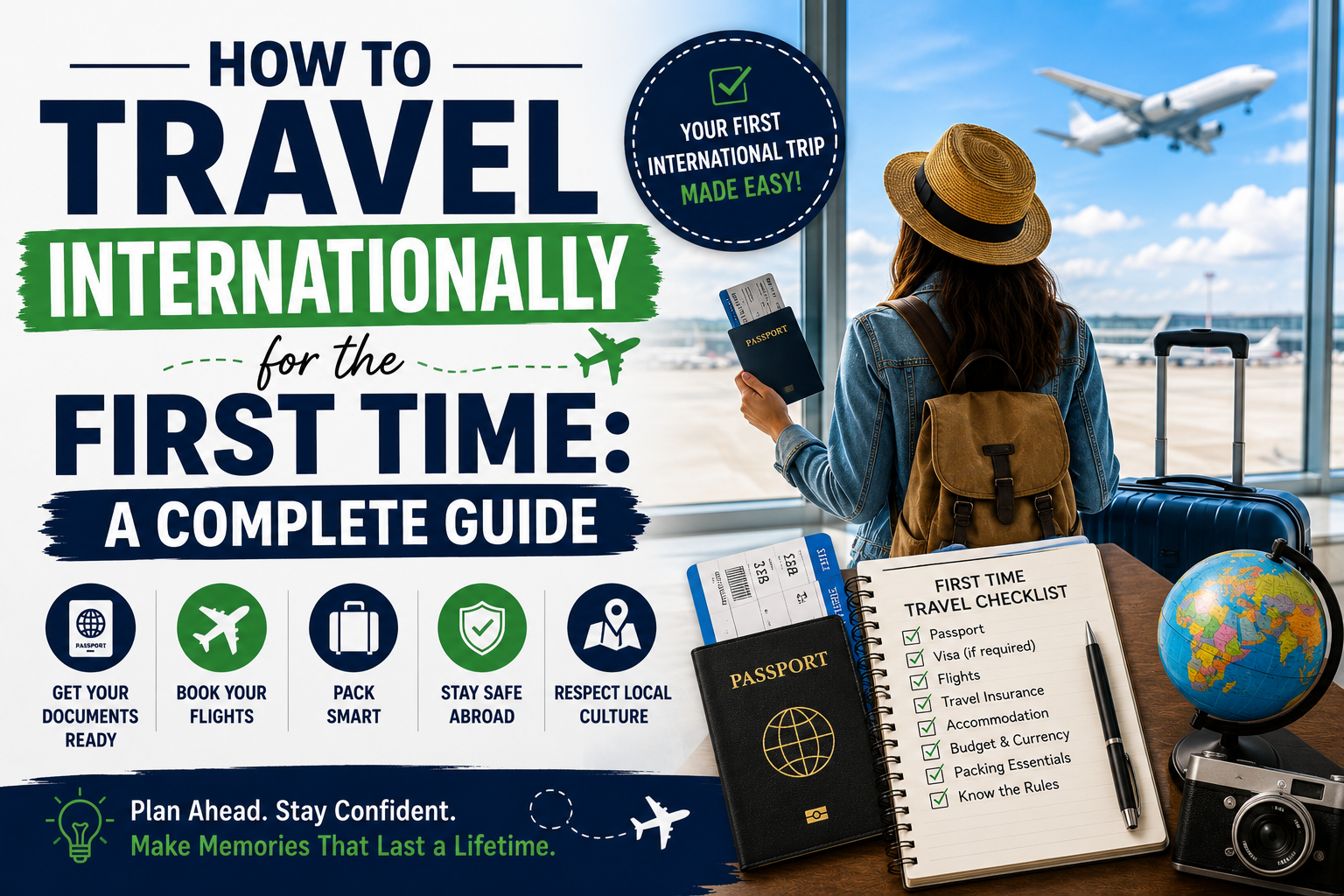
Sarah stood in her kitchen at 2am, laptop glowing, sixteen browser tabs open, and a growing sense that she had made a terrible mistake. Not the trip itself. Booking a flight to Portugal had been the easy part, one click, one confirmation email, done. The mistake was assuming that was the hard part.
Now she was staring at a passport that expired in four months, a visa page she didn’t understand, and a Reddit thread arguing about whether she needed a Yellow Fever certificate (she didn’t, she wasn’t going anywhere near Yellow Fever territory, but the panic had already set in). If this sounds familiar, you’re in good company. Almost every first time international traveler has had their own version of Sarah’s 2am spiral. The good news is that it’s completely avoidable, and it starts with understanding that international travel isn’t actually complicated. It just has a sequence. Once you know the sequence, everything clicks into place.
It All Starts With a Little Blue Book
Sarah’s first problem was real. Passports need to be valid for at least six months beyond your travel dates for many countries, and hers wasn’t. This single rule catches more first time travelers off guard than almost anything else on this list, so check yours today, right now, before you read another word. If you don’t have a passport yet, apply as early as you can. Processing times shift constantly, and expedited service costs more and still isn’t instant.
Once your passport is sorted, snap a photo of the information page and store it somewhere safe, like a cloud folder or an email to yourself. If your passport ever goes missing on the road, that photo turns a nightmare into a minor inconvenience.
The Visa Puzzle
Here’s where a lot of trip planning derails, because visa rules are never one size fits all. They depend entirely on your nationality and your destination. Some countries wave you through with just a passport stamp. Others hand you a visa right at the airport for a small fee. Some let you apply online in advance through an eVisa system, while others still require a formal application through an embassy, sometimes with an interview.
The trick is going straight to the source. Official government or embassy websites tell you the truth. Random travel blogs and third party visa sites often don’t, and some exist purely to charge inflated fees for information you could get for free. If your destination requires the traditional embassy route, start that process as soon as your flights are booked, because it can take weeks.
The Boring Stuff That Actually Matters
Somewhere between the excitement of booking a trip and the excitement of boarding the plane sits a pile of unglamorous logistics that nobody posts about on social media. But skip them, and they will absolutely find you at the worst possible moment.
Some countries want proof you’re not planning to disappear into their country forever, so they ask for a return ticket. Others want to see you have enough money to support yourself. A few require specific vaccinations depending on where you’re arriving from. None of this is exciting, but a quick check of your destination’s official immigration website, and possibly a visit to a travel clinic four to six weeks before departure, will save you from being pulled aside at border control while everyone else on your flight strolls through.
Choosing Where You’ll Sleep and How You’ll Get There
Booking flights and hotels feels like the fun part, and it should be, but a few smart choices here make a real difference for a first timer. Aim to book flights two to three months ahead for the best mix of price and availability, and be wary of tight international layovers. Ninety minutes sounds fine until you’re sprinting through an unfamiliar airport with a language barrier and a passport control line.
For your first stay abroad, look past the star rating and read the recent reviews instead. Confirm the neighborhood feels safe and well connected, and consider a hotel with a front desk that’s staffed around the clock. It’s a small comfort, but on your first trip, small comforts matter more than you’d think.
If any of this planning feels overwhelming, this is exactly the kind of trip where a travel agent earns their keep, quietly stitching together your flights, stays, and transfers, and stepping in if anything goes sideways.
The Insurance Nobody Wants to Buy
If there’s one step first timers skip and later regret, it’s travel insurance. It doesn’t feel necessary until the moment it’s the only thing standing between you and a five figure medical bill in a country where your regular health insurance means nothing.
A decent policy covers trip cancellations, medical emergencies, lost luggage, and missed connections. It costs a small fraction of what a single emergency room visit abroad can run. Buy it. Sarah didn’t, on that first Portugal trip, and spent three tense hours in a pharmacy trying to explain a mild allergic reaction using hand gestures and a translation app. She bought insurance for every trip after that.
Making Peace With Money
Before you leave, call your bank and card companies and tell them where you’re going. Nothing ruins a first morning abroad like a frozen card because your bank flagged a coffee purchase in Lisbon as suspicious. Bring more than one way to pay, ideally a card with no foreign transaction fees, a debit card for ATM withdrawals, and a bit of local cash tucked away for markets or emergencies. Skip the currency exchange counter at the airport. It almost always offers the worst rate you’ll find anywhere. A local ATM will treat you far better.
Staying Connected Without Losing Your Mind
Landing in a new country with no working phone is disorienting in a way that’s hard to explain until you’ve lived it. These days, the easiest fix is an eSIM, which you can buy and activate before you even board your flight. No hunting for a local SIM card counter, no fumbling with a tiny plastic tray. Download offline maps and a translation app before you leave home too, because you will need them before you find reliable Wi-Fi.
Packing Like You’ve Done This Before
International baggage rules often differ from domestic ones, so check your airline’s specifics rather than assuming. Keep essentials like medication, a change of clothes, and chargers in your carry on, just in case your checked bag takes a different flight than you do. Bring a universal power adapter, since plug types vary by region, and leave a little extra room in your suitcase, because you will buy things you didn’t plan on buying.
Make copies, digital and physical, of your passport, visa, insurance policy, and itinerary. Keep one set separate from your bags entirely.
A Little Culture Goes a Long Way
You don’t need to be fluent to travel well. Learning to say hello, please, and thank you in the local language changes how people respond to you, almost every time. Look into basic etiquette too, tipping customs, dress codes for religious sites, greeting norms. It’s a small effort that locals notice and appreciate, and it also helps you spot common tourist scams before they spot you.
Just in Case
Before you go, save the local emergency number and the contact for your embassy or consulate. Tell someone at home your itinerary. Many governments offer free traveler registration programs that send safety alerts and can help locate you in a crisis, and it takes five minutes to sign up. Screenshot your hotel’s address in the local language too. It’s saved more than one traveler a confusing taxi ride.
Back to Sarah
Sarah made it to Portugal that first time, jet lagged and slightly frazzled but genuinely thrilled. She fixed her passport issue with two weeks to spare, learned the visa rules didn’t apply to her at all, and spent her first night eating pastel de nata on a stranger’s recommendation, completely unaware of how close she’d come to unraveling over a Yellow Fever certificate she never needed.
Every first time international traveler has a version of that story. The nerves are normal. The spiral at 2am is normal. What makes the difference is knowing the sequence ahead of time, so the nerves fade into excitement instead of panic.
If you’d rather skip the spreadsheets and the browser tabs entirely, that’s what we’re here for. Talk to one of our travel experts today, and let’s make your first international trip the good kind of story.